

Friday, June 20, 2008


Wednesday, June 11, 2008
City of Clayton demands immediate demolition of Harris Armstrong's Vandervoort's Building
 Everyone has heard that Centene is returning to their original plan to build in Clayton after playing Downtown St. Louis so that Clayton would cave-in and agree to unprecedented subsidies to lure them back. What seems to have missed the radar is that Harris Armstrong's unique Scruggs Vandervoort Barney aka the Library Limited building could have been saved at least for several years had it not been for the complete ignorance of the City of Clayton's politicians. My suspicions were confirmed in an article in last weeks West End Word stating that at least temporarily, the historic Harris Armstrong building was going to be spared.
 Under a revised plan, Centene was going to build a tower at the corner of Carondelet and Hanley first, while leaving the Harris Armstrong building standing for "temporary offices". The phase two second shorter tower at the corner of Forsyth & Hanley would be built at an "unspecified date in the future, dependant on market conditions". In others words, it may never have happened.
 It is unclear if Centene would have kept the Harris Armstrong building standing after construction was complete on the first tower, but they would have no real reason to demolish it until they planned to built on the site. They paid $12 million for the building and garage behind, so they might as well lease it out the building and get some revenue from it until the uncertain phase two, right?
 Now reduced to "Bldg B", Centene could have converted the
building back to retail after building their first tower
Unfortunately, the City of Clayton demanded that the first tower go up on the corner of Forsyth and Hanley, triggering a demolition of the historic building this summer. Their concern is for revitalization of Forsyth. If Clayton was so concerned about Forsyth, they would have long ago created a master plan for active mixed use redevelopment of the street from the Parkway to Bemiston. Instead, they have sat and watched what was the premier retail street in St. Louis County become a series of vacant lots and underutilized properties characterized by inactive (non-retail) uses on the ground floors. At the same time, development of the former "Clayton hole" has moved the center of gravity one block south to Carondelet. A new tower with retail at Hanley and Carondelet would have nicely tied what is an isolated area with the core of downtown Clayton.

Monday, June 2, 2008
Follow up from my last post

Saturday night I was browsing the St. Louis Views section of the Mercantile Library collection at UMSL, and came across this aerial image of Downtown St. Louis pre-1940. The photo was actually a cover for a promotional brochure tempting readers to "Visit St. Louis - The City of a Thousand Sights". The photo shows the historic riverfront district prior to its clearance for the arch grounds (area shaded red). Hundreds of buildings on covering 36 blocks were demolished beginning in 1940. The same photo shows the few surviving riverfront warehouses (shaded orange) in the 1100 block of Leonor K. Sullivan that LCRA seems hell bent upon demolishing.

The same night I happened to catch the original 1960 version of Phycho. I could not help being amused by the large Victorian mansion up the hill from the Bates Motel portrayed as the stereotypical "scary house". This was not by accident, as the prevailing thought at that time was that these dark old Victorians were outdated and obsolete and that they should be cleared for new modern structures in the name of "progress". Victoran homes, like the one that SLU is poised to destroy at 3740 Lindell, are a rarity in Midtown now because hundreds of them were demolished for the Mill Creek Valley Urban Renewal Project.
 Is it 1960 again on SLU's campus? No, if that were the case, SLU would not have recently contemplated "updating" (destroying) the almost mint condition Pius Library (not sure if this was or is going to be implemented). Arbitrary stylistic judgements have been made though on both fronts and could result in the loss of architectural history from two distinct periods of time.
Friday, May 23, 2008
3740 Lindell to be demolished this summer
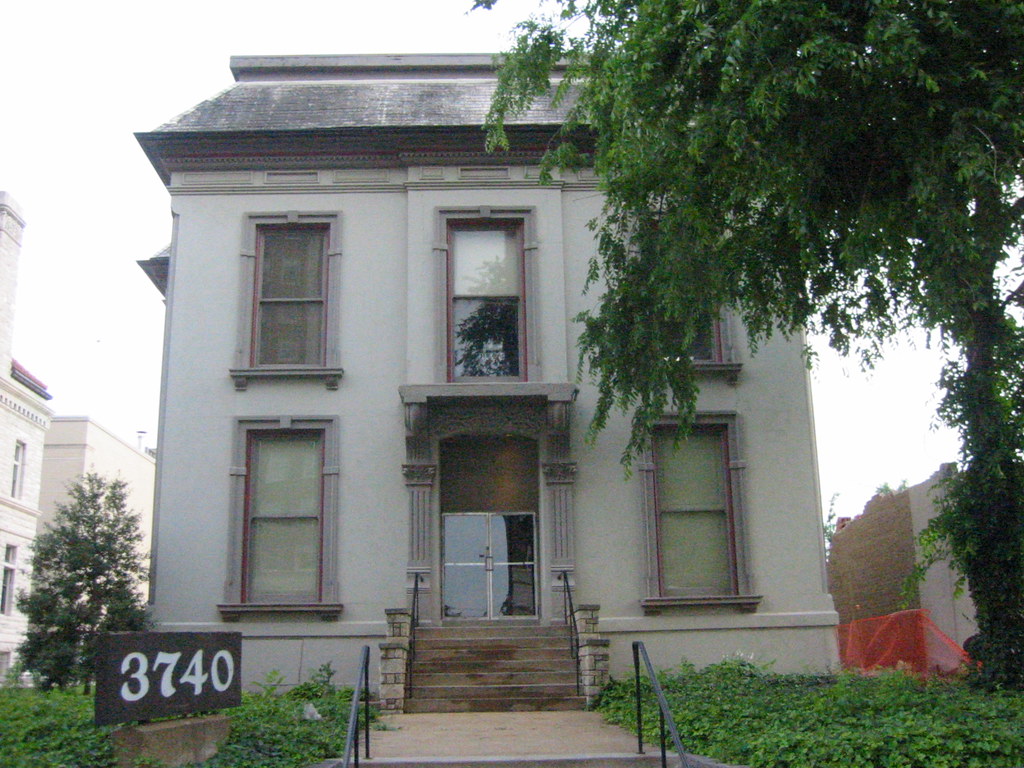 Since 1883 the demure Italianate mansion at 3740 Lindell Boulevard has stood witnessing the transformation of Lindell from Grand to Kingshighway from a tree-lined boulevard of grand homes of St. Louis' most notable residents to an eclectic mix of apartment buildings, hotels, various societies & religious institutions, businesses, as well the remaining mansions, which have been adapted for various uses.
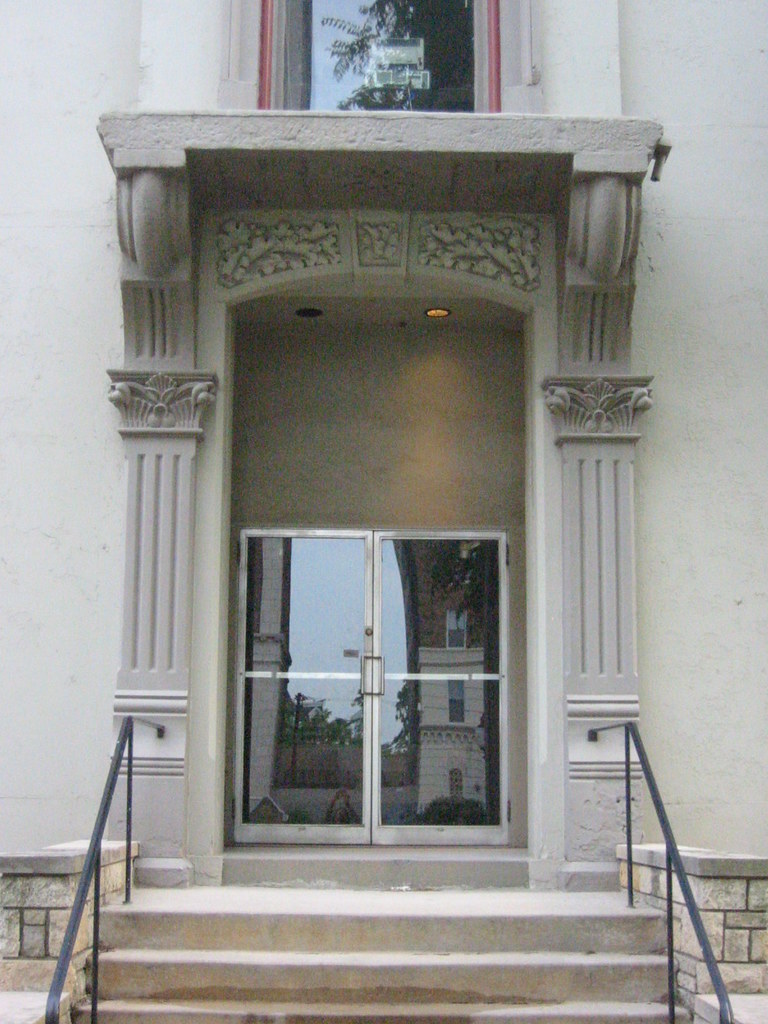 Monday evening however, the St. Louis Preservation Board voted to allow SLU to demolish the mansion to make room for an expansion and re-styling of its law school. In what amounts to an arbitrary choice of style, SLU is saving the more grandiose turreted mansion to the east known as the "Queens Daughters" building and demolishing the more reserved mansion next door. The absence of strong preservation minded members John Burse and Michael Killeen left a 3 to 2 vote in favor of demolition. Those voting for demolition were: Mary "One" Johnson, Terry Kennedy and David Richardson. Barring an appeal of the decision, the 125 year old mansion will be demolished this summer.
Also at Monday's meeting the board voted with the exact same 3-2 split to demolish the last full block of historic commercial warehouses on the St. Louis Riverfront. The three buildings, which are owned by the LCRA are located at 1101 N. Leonor K. Sullivan Blvd. (Wharf Street) between Biddle and Carr. A four story 1880's warehouse occupies the middle of the block with an older one story limestone cold storage building to the north and a two story warehouse to the south dating from the mid 1900's.
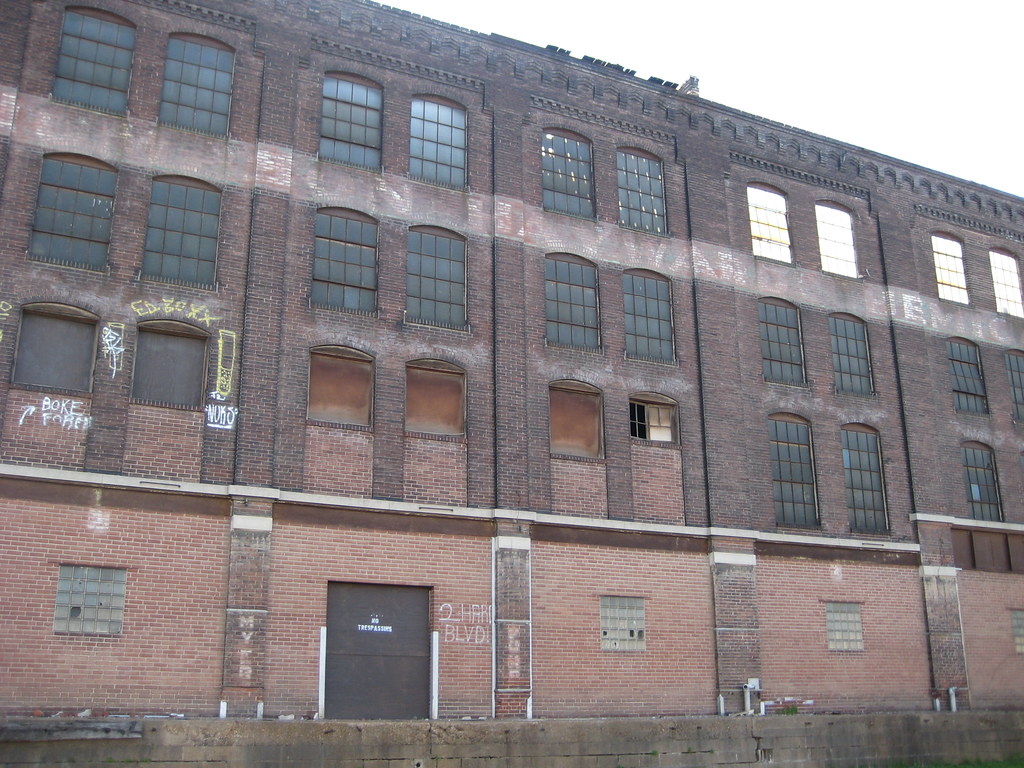 The majority of St. Louis' riverfront warehouses were demolished in 1940 to make way for the arch grounds. While many historic buildings remain in both Laclede's Landing and Chouteau's Landing, none remain along the river fronting on Wharf Street. North of the doomed block both the Laclede Power Company and the remaining north half of a cold storage lie along Wharf Street, but their addresses are on Lewis to the west. The massive Ahsley Street Power Plant is east of Wharf Street, kitty corner to the three warehouses. Unfortunately the warehouses lie outside the North Riverfront Industrial Historic District which includes the buildings to the north.
 postcard views of the St. Louis riverfront in the late 1800's
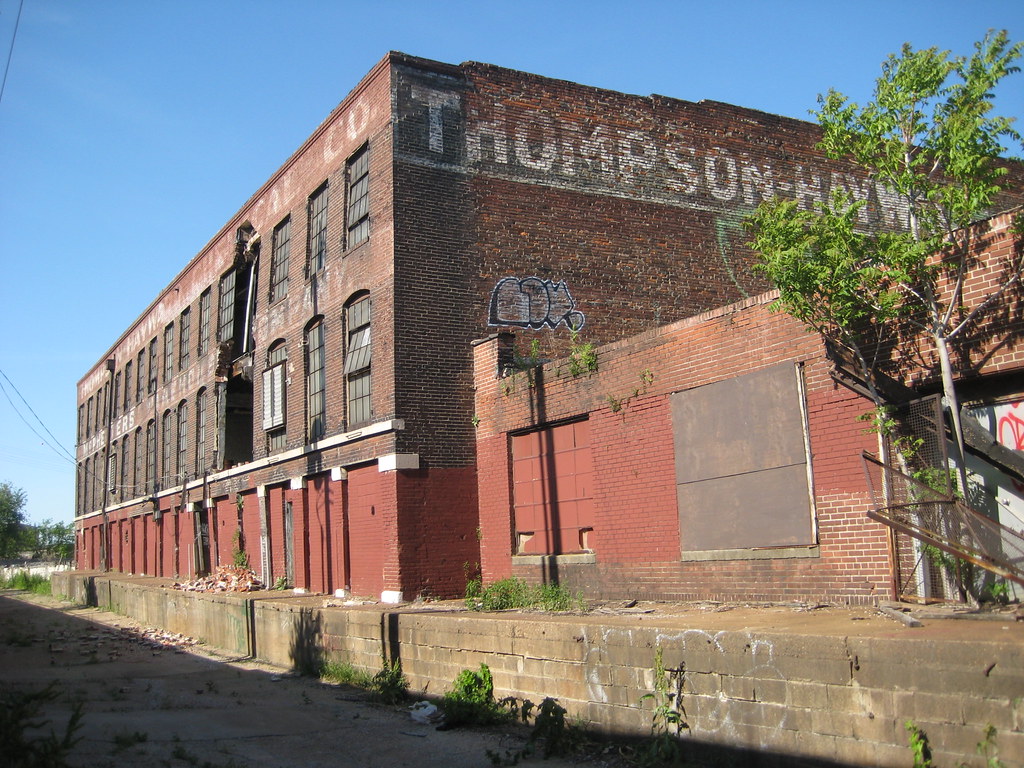 Once they did not receive any submittals, which is not too surprising given current economic conditions and the relative isolation away from re-developed properties, the LCRA suddenly deemed the buildings as in the way of development. However site plans and models that have been presented by Lumiere show the phase 2 development ending at Carr, south of the warehouses. Pinnacle has committed to $50 million in residential development. What they have shown south of Carr would easily satisfy this requirement. There have been no plans released for a phase 3 north of Carr... lets face it Pinnacle is a casino developer, not a residential developer. If these warehouses are indeed demolished, I predict that the site will remain a vacant gravel lot for up to a decade or more like the nearby Fresh Building which burned and it's remaining portion carelessly demolished in 2001.
Saturday, May 17, 2008
Lights out forever at the Shady Oak Theater
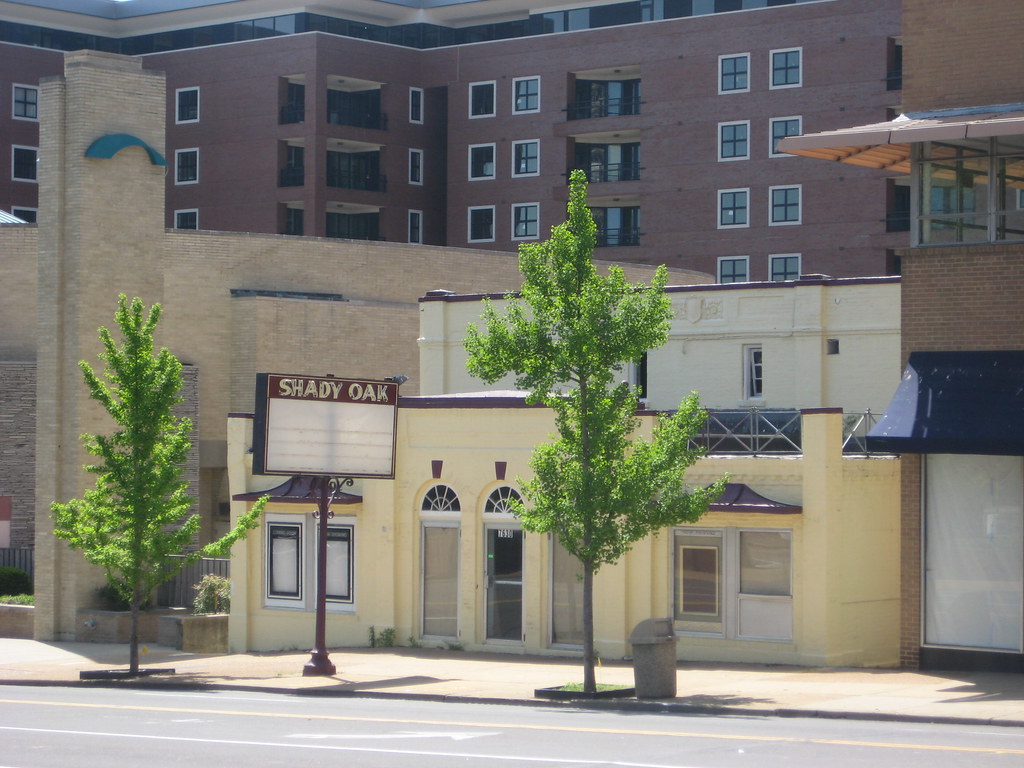
Next feature showing: Parking Lot.
Recently the Business Journal reported that the new owner of the Shady Oak Theater has submitted a permit application for a demolition permit to make way for St. Louis' favorite building replacement, a parking lot for the building next door at the southeast corner of Hanley & Forsyth.
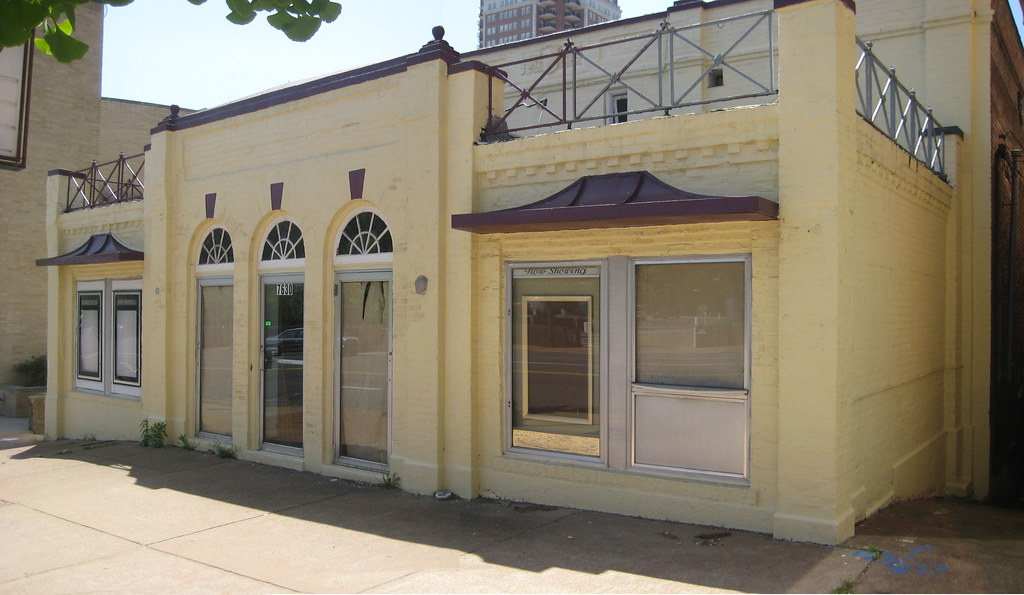
The theater, which was last operated by Wehrenberg, closed in 2002, but there were several ideas floated for adaptive re-use of the building including as a live theater venue, and most recently as a restaurant. The former owner had gone as far as lining up leases for parking spaces in a nearby garage and lot across Forsyth to serve the restaurant, but those plans unfortunately never came to fruition. Core 10 Architecture did an interior rendering of the proposal, which can be seen here.
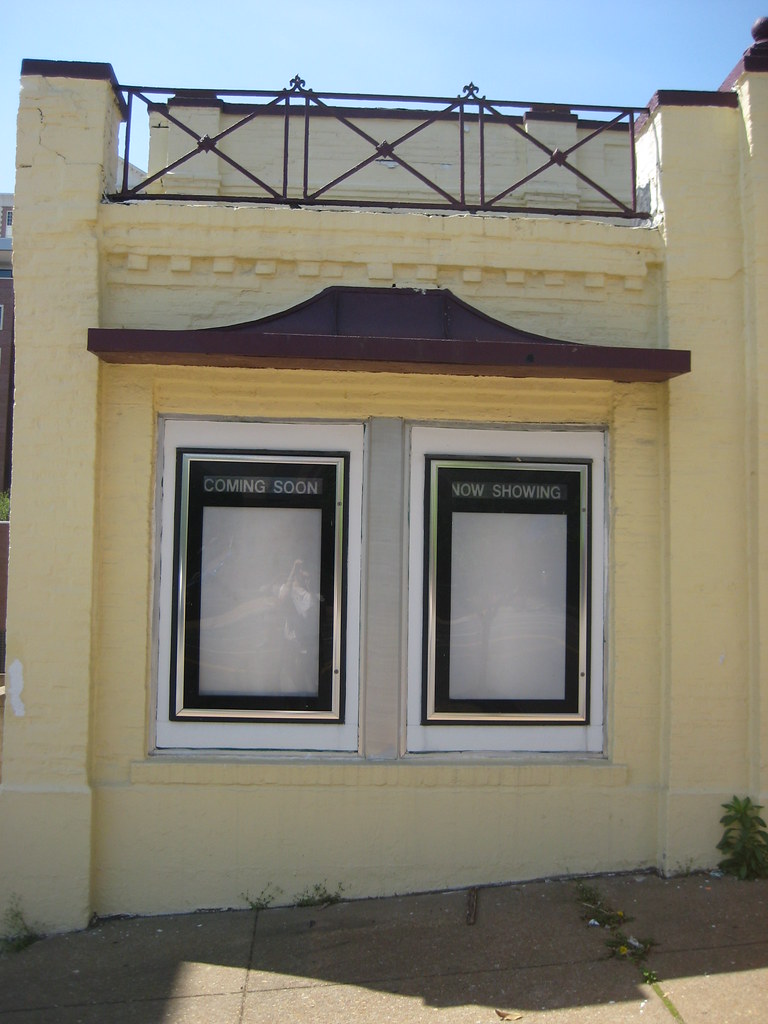
The colonial revival/art deco Shady Oak was built in 1933, and according to Cinema Treasures, took its name from an airdome (outdoor) theater next door that was shaded by oak trees. It is hard to imagine this when you look at Clayton today, but the image below taken in the late 1920's from a National Register nomination for the Seven Gables shows that Clayton was a very different place when the Shady Oak was built.

The Shady Oak was part of the Arthur theater chain, which also ran the nearby Hi-Pointe Theater. Due to the slope of the site of the building, the small lobby was entered at a mid-level with stairs going down to the main floor seating and up to the balcony. The ceiling of the auditorium had a decorative coffered look that was achieved with concrete poured over pan forms, which is kind of a pre-curser to the waffle slab technique that became popular in the 1960's. The old Regal Theater on MLK (subject of my next post), which also was demolished last year for a parking lot had the same type of ceiling/roof structure.
Saturday, May 10, 2008
Mourning the loss of what never existed: Centene's Downtown Headquarters
 This is probably my most unusual post yet, the loss of something that never existed. After recently announcing that they were canceling their plan to move to Downtown, Centene made the official announcement Tuesday that they would return to their original plan and build in Clayton at the corner of Forsyth and Hanley. While this is no surprise, and there was speculation that this would ultimately occur before the announced cancellation of the Downtown plan, it is still a hard blow to the ego of Downtown St. Louis.
 Ballpark Village w/ Centene transposed over the present cess pool
April 1962 - Ground breaking for the 16 story Pierre Laclede
building at Forsyth & Hanley. This building began the rush of
office tenants leaving Downtown St. Louis for the Clayton.
Harris Armstrong's Scruggs Vandervoort Barney department
store, which will be demolished for Centene's headquarters,
is in the background.
Now with Centene's headquarters, the recently announced redevelopment and expansion of Brown Shoe's headquarters, and several other large proposals on the boards, there will be some who will say that Clayton may well have taken that title.building at Forsyth & Hanley. This building began the rush of
office tenants leaving Downtown St. Louis for the Clayton.
Harris Armstrong's Scruggs Vandervoort Barney department
store, which will be demolished for Centene's headquarters,
is in the background.
Much of Clayton however lacks the integration of office, residential, and retail/restaurant that has occured in Downtown's redevelopment over the last decade. This alone makes Clayton a less desirable environment than Downtown for living and spending time outside the corporate headquarters.
Tuesday, May 6, 2008
Decommissioning A City: The Team 4 Plan in real time - Youngstown, Ohio
A post today by Abby Wilson on GLUEspace focuses on a CNN Money article about a plan currently being implemented in Youngstown, Ohio. Dubbed Plan 2010, is essentially the decommissioning of the city, block by block in areas of the city that have decayed. Abandoned buildings are demolished, streets and infrastructure are ripped out, and the area is returned to open green space in order to save money that would otherwise be spent to maintain the infrastructure.
This is basically the "Team 4 Plan" officially adopted and put into action. Youngstown has given up hope that urban re-birth will ever occur and is pulling the plug. The really scary thing is that officials in other smaller rust-belt cities are coming to Youngstown to study the plan to see if it is something they should adopt in their respective cities.
This is basically the "Team 4 Plan" officially adopted and put into action. Youngstown has given up hope that urban re-birth will ever occur and is pulling the plug. The really scary thing is that officials in other smaller rust-belt cities are coming to Youngstown to study the plan to see if it is something they should adopt in their respective cities.
Subscribe to:
Posts (Atom)