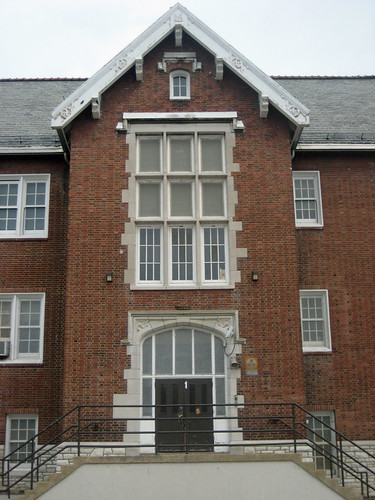
The William Stix Elementary and Elias Michael schools were both designed by Rockwell M. Milligan who followed William b. Ittner as Commissioner of Buildings for the Board of Education from 1917 until his death in 1929. Stix was opened in September 1921 and was named for William Stix who was a co-founder of Rice-Stix Dry Goods, which built and occupied the Merchandise Mart on Washington and two annex buildings on St. Charles which are now the 10th Street Lofts and the 1015 Locust Buildings.


A side view of the Stix School
The Michael School was opened in September 1925 and was named for Elias Michael, a prominent civic leader and member of the Board of Education. His wife Rachel Stix Michael founded the Missouri Occupational Therapy Association and after her husband’s death was instrumental in establishing the Elias Michael School for Crippled Children in his memory. The building was the first public school built specifically for children with physical disabilities. The Michael School was located at the southeast corner of Forest Park Boulevard and Euclid Avenue. The Stix School was just south of Michael and terminated the vista of Parkview Place as it made a slight jog south at Euclid. Today Parkview Place is terminated by what seems to be the building replacement option of choice in St. Louis, a parking garage.

The corner of the Michael School at Euclid & Forest Park
Here is an overall photo of the Michael School from the intersection of Forest Park & Euclid from the Missouri History Museum collection. The Stix School can be seen behind.
In 1995 BJC and SLPS a land swap deal was stuck in which BJC would secure ownership of the Stix and Michael Schools and SLPS would have a new Stix School built largely at BJC's expense on land BJC owned at Tower Grove Avenue and Highway 40. In 1997 the new school was completed and in the fall of that year both historic Stix and Michael Schools were demolished. The Michael School's programs were transferred to the then recently built Gateway School on Jefferson.
A large new parking garage was immediately built on the Stix site and somewhat overlapping the Michael site. The eight story Parkway Hotel was then built at the corner of Forest Park and Euclid on the remaining Michael School site. A few years later BJC demolished a small three story building east of the hotel and proceeded to pave a surface parking lot.
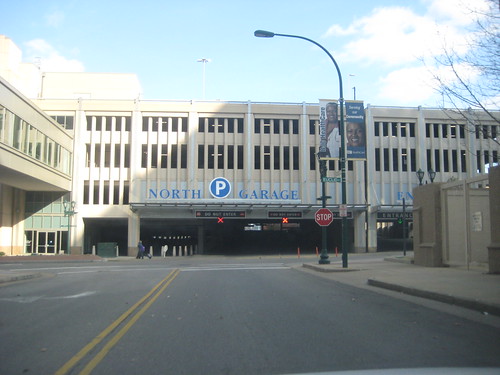
The parking garage now terminates Parkview at Euclid
There is no doubt that BJC needed space for expansion. As part of an ongoing building program at the BJC complex a large parking structure that had spanned Parkview Place was demolished and the 14 story Center for Advanced Medicine was built on that site. New parking was needed to replace the demolished garage and there was an obvious need for hotel lodging adjacent to the hospital complex.

A 1995 aerial view showing the location of the two schools

The same aerial view today
Unfortunately there was failure with both SLPS and BJC to see the value of the historic school buildings. The School Board swapped the historic buildings for a school knowing that they would be demolished setting a dangerous precedent. BJC failed to make any attempt to incorporate the historic buildings or even portions of them into the new programmatic need to be built on the site.

The Parkway Hotel at Forest Park & Euclid
Sometimes it takes out of the box thinking to creatively incorporate historic structures into contemporary needs. In this case, the parking structure could have been built to the east of the Stix and Michael Schools and extending onto the parcel that is now surface parking. The Stix School could have been renovated as an extended-stay lodge to house families who need to stay near the hospital. The classrooms would have been an ideal size for the small apartment style units in this type of lodging. A new hotel tower could have been constructed on top of the one story Michael building by coring out the center of the building and incorporating the facade and exterior rooms into the lobby and Applebee's restaurant space. A garage entrance as well as the bridge to the Center for Advanced Medicine could have been slipped between the two historic structures. Admittedly, the Michael School was fairly utilitarian compared to Stix, and having the hi-rise hotel right on the corner is attractive from an urbanistic standpoint, but the parking garage is no replacement for the Stix School.
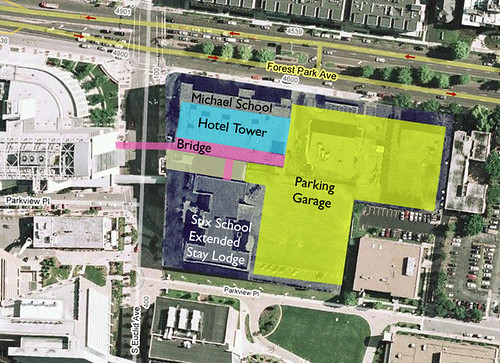
A diagram of how the hotel and garage could have been
developed with the existing buildings
The loss of the Stix and Michael Schools are just one more example of the general lack of stewardship for the irreplaceable historic SLPS buildings by the Board of Education in recent memory. With a Facilities Management Plan written by an out of town and out of touch consultant calling for closing and uncertain futures for 30 buildings on the verge of being adopted by the current board, vigilance will be need to avoid repeating the fate of Stix and Michael. This Thursday, February 26th the SLPS Special Administrative Board will be meeting at 6:00pm at the Gateway School on Jefferson. The board will likely be voting to adopt the Facilities Management Plan that evening.

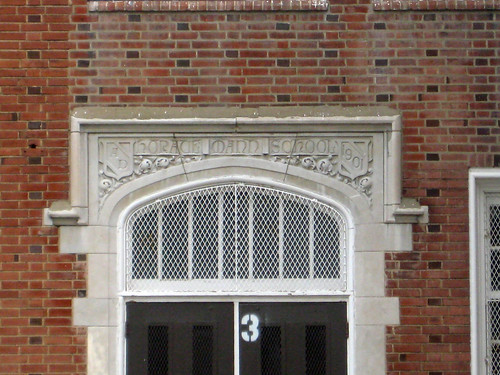
 St. Louis Public School Superintendent Dr. Kelvin Adams will be hosting a meeting this Tuesday evening, March 31 at Mann Elementary to discuss the school's future. The meeting will be at 6pm in the school's relatively new (15 years old) gymnasium east of the main building at Juniata and Oak Hill. On March 12th, the Special Administrative Board voted to adopt a plan that would close Mann in 2011 and replace it with a new school, which is rumored to be built on the site of the existing historic school resulting in it's demolition.
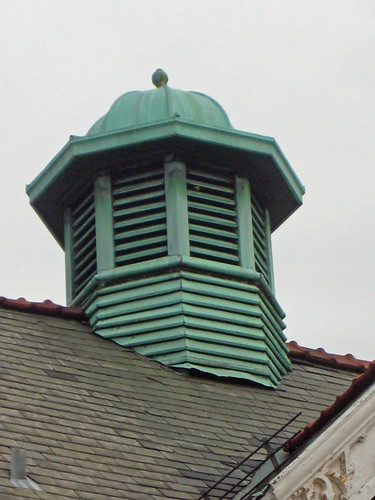
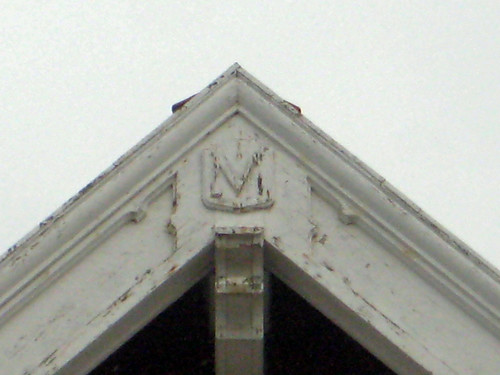
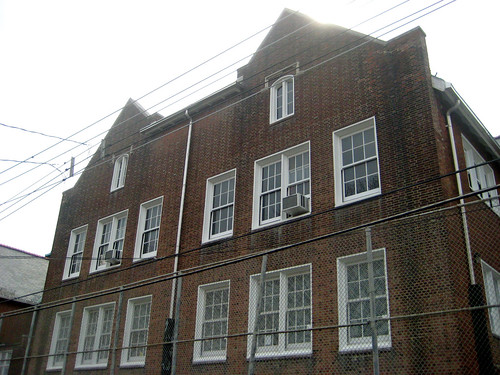
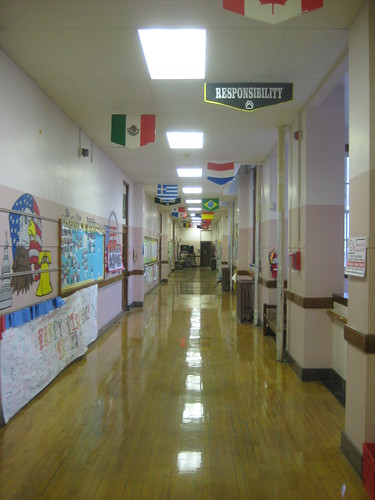
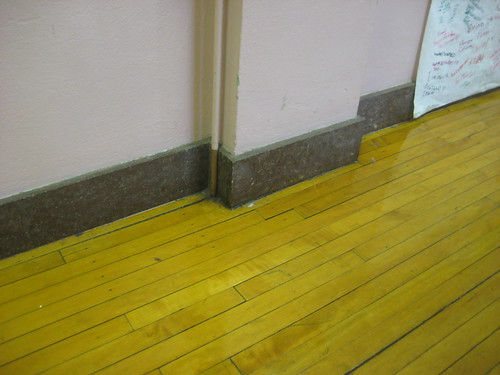 Last Tuesday evening, members of the Alliance to Preserve Mann Elementary, were given an extensive tour of the interior of the historic school building, the original portion of which dates to 1901. We were impressed with the overall excellent condition of the school's interior. The building has generally been well maintained, and is exceptionally clean. The hardwood floors and granite base moldings found throughout the halls and classrooms shine bright enough to see a reflection.
 The building's windows look almost new, and that is because they are. They were completely replaced with exact replicas of the originals in 1991 as part of a $100 million district wide renovation bond issue. The school's gymnasium is also almost new. It was completed in 1994, at a cost of $1,360,500.00 according to City real estate records.
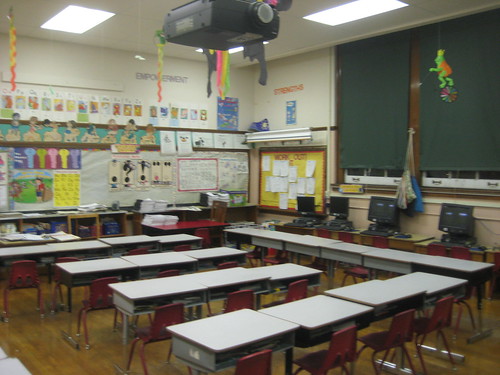 Like any school of its age with older systems, the building could use an overhaul of it's HVAC system as well as electrical and plumbing upgrades. This presents an opportunity to install new systems through a renovation that would be more energy efficient and reduce operating costs.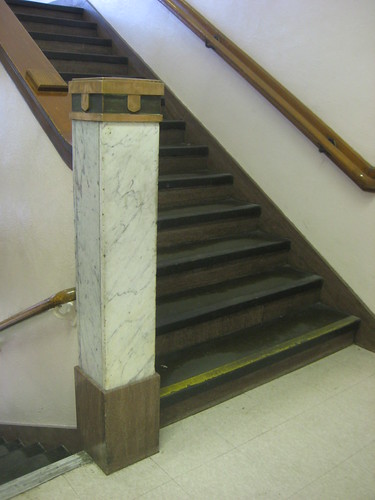
 Beyond the excellent condition of Mann's physical structure, there is the fact that the student enrollment is near capacity. The school is part of the EMints program which provides a computer for every two students. Additionally, students at Mann are able to participate in Oasis tutoring, Faithful Friends, and 40 students are enrolled in Urban Future programs. Mann is a model neighborhood school that should be removed from the Closing list.